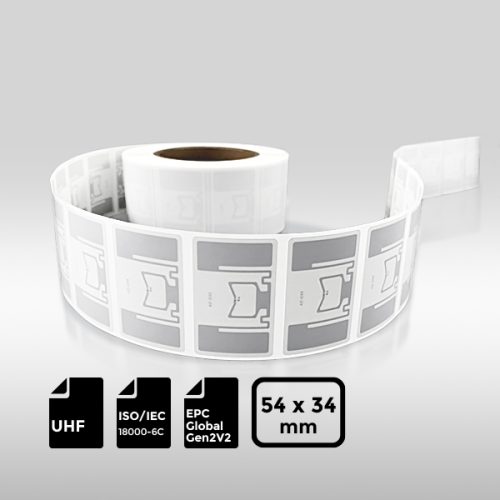

As the demand for global supply chains increases day by day, retail giant Walmart promotes the digital transformation of supply chains to improve inventory management efficiency and reduce losses. As part of its future retail strategy, Walmart will announce the full implementation of RFID technology in 2026. Suppliers need to make corresponding adjustments according to Walmart’s requirements. This is both a challenge and an opportunity for suppliers. This blog will provide a detailed analysis of the background information, specific implementation requirements and impact on suppliers of Walmart RFID mandate 2026. On this basis, some suggestions will be given.
What are the specific requirements for Walmart RFID Mandate 2026?
Walmart RFID Mandate 2026 contains the following requirements:
- Commodity grade labels: All goods provided by suppliers to Walmart must be affixed with RFID labels, making it easier for Walmart to accurately track goods.
- Data synchronization: The product information provided by suppliers needs to be synchronized with Walmart’s RFID system. While ensuring that inventory information is updated promptly, avoid stock shortages or redundancy.
- Compliance: The RFID labels attached to suppliers’ goods must be ARC-certified and meet the technical standards set by Walmart. This ensures that the label can be read normally in Walmart’s existing RFID system.
- Training & support: Suppliers need to provide employees with corresponding RFID technology training so that employees can quickly and skillfully master the application of RFID labels and the management of data information.
Detailed Background of Walmart’s Mandatory RFID Requirement
Walmart’s adoption of RFID technology did not happen overnight. As early as 2020, Walmart began requiring apparel suppliers to use RFID tags. As the program demonstrated significant success in improving inventory accuracy, the scope of mandatory implementation has steadily expanded over the past few years.
1. Affected Product Categories
According to the latest policy update, Walmart has extended its RFID requirements to nearly all general merchandise categories. Below are the primary departments currently and soon requiring item-level tracking:
- Home Goods: Includes bedding, kitchenware, and decorative items.
- Electronics: Televisions, computers, audio equipment, etc.
- Toys & Sporting Goods: Various children’s toys and fitness equipment.
- Automotive: Tires and all types of automotive parts.
- Stationery: Paper, writing instruments, and office supplies.
- Hardware & Garden: Tools, outdoor furniture, and gardening equipment.
2. Key Deadlines
Walmart has established clear compliance timelines for suppliers across different categories. Most categories newly added to the mandatory scope are required to complete system integration and labeling by 2024 and 2025. For many suppliers, August 1, 2025, represents a critical final deadline. Suppliers failing to comply on time may face penalties, product rejection, or even risk losing Walmart supplier eligibility.

Why is RFID tracking an inevitable trend in the industry?
Walmart’s unwavering commitment to item-level tracking stems not from whim, but from deep business insights and technological evolution. In traditional retail models, barcodes served as the sole identifier, yet their limitations became glaringly apparent in today’s high-frequency transaction environment.
1. Revolutionary Inventory Accuracy and Visibility
Traditional barcode scanning is considered a line-of-sight task, requiring the scanner to be directly aligned with the label. This means inventory staff must physically pick up each item for scanning. Not only is this approach labor-intensive, but it also suffers from high error rates. Statistics show traditional retail inventory accuracy typically hovers around 65%.
In contrast, RFID technology communicates via radio signals, eliminating the need for line-of-sight contact. A box containing hundreds of garments can be inventoried in seconds using an RFID tunnel scanner or handheld device, achieving over 99% accuracy. This near-perfect inventory visibility drastically reduces stockouts, directly boosting sales.
2. The Core Engine of Omnichannel Retail
Modern consumers expect inventory data displayed on their phones to perfectly match what’s on store shelves. In “Buy Online, Pickup In-Store” (BOPIS) or “Ship From Store” (SFS) models, even a 1% discrepancy in inventory data can lead to failed order fulfillment and diminished customer satisfaction. Item-level RFID tracking provides retailers with real-time, granular precision data, ensuring seamless omnichannel operations.
3. End-to-End Anti-Counterfeiting and Anti-Theft in Supply Chains
Each RFID tag carries a unique EPC code, functioning as the product’s “electronic ID.” At any supply chain checkpoint where a reader is present, the system records the item’s journey. This significantly reduces product loss during transit while providing brands with robust anti-counterfeiting capabilities. For renowned apparel brands like Nike and Adidas, RFID serves as a powerful tool against counterfeit goods.
4. Enhancing Consumer Experience
In retail stores, RFID technology enables features like express checkout and smart fitting rooms. Shoppers no longer need to wait in long lines for cashiers to scan barcodes individually. Instead, they can simply push their carts through RFID-enabled zones for instant pricing of all items. This seamless shopping experience is central to future retail competition.

Technical Standards for Supplier Compliance
Walmart not only requires tagging but also imposes strict technical specifications on the tags.
- UHF Gen 2 Protocol: Suppliers must use Ultra-High Frequency (UHF) RFID tags compliant with the EPC Gen 2 standard. This technology supports long-range reading (typically over 10 meters), making it ideal for large distribution centers and retail store environments.
- ARC Certification: Walmart mandates that all RFID tags used must pass Auburn University’s ARC certification. This certification guarantees tag performance and reliability within specific application environments. As a professional RFID manufacturer, RFIDlabel provides tags compliant with mainstream industry certification standards, ensuring your products navigate Walmart’s supply chain seamlessly.
- Unique Encoding (EPC): Each individual item must be assigned a globally unique EPC code. This necessitates suppliers establishing a comprehensive coding and printing system to prevent duplicate tags.
Technology Comparison: Traditional Barcodes vs. RFID Tags
To better understand why Walmart chose RFID, we can refer to the table below:
| Characteristics | Traditional Barcode | RFID Tag |
| Reading Method | Requires line-of-sight alignment, scanned individually | No alignment needed, supports batch reading |
| Reading Speed | Slow (approx. 1-2 per second) | Extremely fast (up to hundreds per second) |
| Data Capacity | Limited (typically contains only SKU) | Large (can include unique serial numbers, production dates, etc.) |
| Durability | Prone to damage; unreadable after contamination | Robust; can be embedded within packaging for moisture and contamination resistance |
| Automation Level | Low; requires significant manual labor | High; enables unattended scanning |
| Security | Easily counterfeited | Difficult to replicate; supports encryption |
Practical Guide to Implementing RFID Tracking
Compliance is not achieved overnight; it requires systematic planning. Below are key implementation considerations for suppliers:
- Tag Selection: Choose the most suitable RFID antenna design based on product material (e.g., plastic, metal, fabric).
- Code Management: Establish an EPC code database based on GS1 standards to ensure global uniqueness.
- Printing and Verification: Use professional RFID printers for online printing and verification to eliminate defective tags.
- Data Integration: Integrate RFID data with existing WMS (Warehouse Management System) or ERP systems to synchronize data flow with physical logistics.
- Site Environment Optimization: Install fixed readers in warehouses and retail locations while optimizing antenna placement to eliminate signal dead zones.
Recommended Steps for Implementing RFID Tracking
If you are a Walmart supplier, we recommend following these steps to begin your RFID transformation:
- Assess product categories: Confirm whether your products fall under Walmart’s current mandatory tagging requirements.
- Select certified tags: Obtain samples of UHF RFID tags compliant with ARC standards.
- Upgrade software systems: Ensure your ERP system can process EPC coding and integrate RFID data.
- Test and validate: Conduct read tests before large-scale shipments to ensure 100% read rates for tags within packaging.
- Train staff: Educate warehouse personnel on using RFID handheld devices and fixed scanners.

How should suppliers respond to Walmart’s strategy?
- Advance planning: After suppliers understand the RFID strategy implemented by Walmart, they should plan for the application of RFID technology in advance. These include RFID technology selection, process optimization and employee training. This ensures that goods are fully prepared when entering Walmart.
- Selecting the right RFID solution: Suppliers select the most suitable RFID labels and reading equipment based on the characteristics of their products and the needs of supply chain scenarios. For example, some products with metal surfaces or liquid environments require specially designed anti-interference RFID labels.
- Cooperation with professional institutions: Before implementing RFID technology requirements, suppliers should consult a professional RFID solutions organization. From there, they can obtain detailed RFID technical support and customized services. On this basis, it is ensured that the RFID programme can be carried out smoothly.
- Training & education: Suppliers need to provide employees with relevant training in RFID technology. While improving employees ‘skills, familiarize themselves with the application capabilities of RFID. Lay a solid foundation for the efficient operation of RFID systems.
- Continuous improvement: Suppliers should continue to collect feedback after implementing RFID systems. Through continuous optimization and improvement, the stability and operating efficiency of the system are improved.
Conclusion
The implementation of Walmart RFID mandate 2026 means that the retail industry’s supply chain management is moving towards a more digital and intelligent path. For suppliers, they should be prepared in advance and actively respond to this strategy. While improving its competitiveness, it will also occupy its market share. Although it will face certain pressures and challenges in the early stage, the improvement of RFID technology and the expansion of applications will bring longer-term benefits to suppliers. Through reasonable planning and implementation, suppliers can not only meet Walmart’s requirements but also stand out in the fierce market competition.
After reading this blog, if you are interesting about Walmart ARC-certified RFID Labels, please contact our sales experts, who will provide you with the suitable solutions and the professional purchase advice according to your needs. In addition, you can also visit our official website (rfidlabel.com) to browse the relevant information about Walmart ARC-certified RFID Labels.