If you’re diving into the world of wireless communication and data transfer, you’ve likely come across terms like NFC and HF 13.56 MHz. While these terms are related and often overlap, they have distinct uses and characteristics that can be confusing, especially if you’re new to RFID technology.
In this guide, we’ll break down what NFC and HF 13.56 MHz are, how they work, and where they’re typically applied. By the end, you’ll have a clear understanding of their differences and know exactly when and where each technology shines.
Let’s get started!
What Is NFC (Near Field Communication)?
NFC, or Near Field Communication, is a short-range wireless communication technology that enables data exchange between two devices when they’re in close proximity—typically less than 10 centimeters apart. You might recognize NFC from your day-to-day experiences, particularly if you’ve ever used mobile payments like Apple Pay or Google Pay, tapped your phone to pair Bluetooth devices, or scanned smart posters in public places.
NFC operates at a frequency of 13.56 MHz, a part of the high-frequency (HF) radio spectrum, and allows for both one-way and two-way communication between devices. However, its short range makes it ideal for secure, low-power exchanges.

If you are new to RFID technology, you may also want to start with our RFID labels beginner guide before comparing NFC and HF 13.56 MHz in detail : Introduction to RFID Labels: A Beginner’s Guide.
How NFC Works?
NFC works by establishing a wireless link between two NFC-enabled devices. There are two primary types of NFC devices:
Active Devices
These devices, such as smartphones, can send and receive information. They generate their own electromagnetic field and can initiate communication with another NFC device.
Passive Devices
These are NFC tags or cards that do not have their own power source and rely on active devices to power them. Passive devices can store information that an active device reads, such as a website URL, product info, or contact details.
When two NFC devices come into close proximity, they communicate via electromagnetic induction. The active device generates a field that powers the passive device, enabling data transfer. The beauty of NFC is its ease of use—devices can simply be brought close to one another to initiate interaction.
NFC operates in three different modes:
Reader/Writer Mode
The active device reads or writes data to a passive NFC tag. For example, this is how smartphones scan smart posters or access information from NFC-enabled cards.
Peer-to-Peer Mode
This allows two NFC-enabled devices to communicate and exchange data directly. A typical use case would be two smartphones transferring contact information or pictures just by tapping together.
Card Emulation Mode
In this mode, an NFC-enabled device acts like a smart card, allowing it to be used for mobile payments or access control systems (e.g., tapping your phone to pay or enter a secure area).

Common Applications of NFC
NFC technology has found its way into many aspects of our lives, and here are some of its most common applications:
Mobile Payments
Perhaps the most widely recognized use of NFC is in mobile payment systems like Apple Pay, Google Pay, and Samsung Pay. By simply holding your phone near a payment terminal, you can authorize payments securely.
Contactless Access Control
Many offices and residential buildings now use NFC for secure entry systems. Employees or residents tap their phones or access cards on the reader to unlock doors.
Public Transportation
In some cities, NFC technology powers transit systems. Riders use their NFC cards or smartphones to board buses and trains, simplifying ticketing and fare payment.
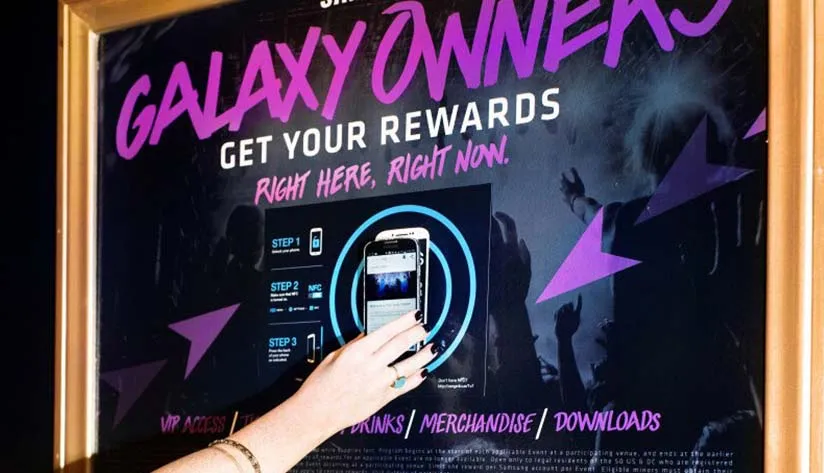
Smart Posters and Marketing
You might have seen posters or advertisements embedded with NFC tags. When a smartphone scans the poster, it can instantly open a URL, launch an app, or display relevant information.
NFC’s strength lies in its convenience, security, and simplicity. Because it works over such a short range, it reduces the risk of data being intercepted, making it perfect for applications where security is critical.
What Is HF 13.56 MHz?
HF 13.56 MHz is a specific frequency band within the RFID (Radio Frequency Identification) technology spectrum. While NFC is a specialized subset of HF RFID technology, HF 13.56 MHz generally refers to a broader category that encompasses more than just NFC. In simple terms, NFC uses the 13.56 MHz frequency, but not all 13.56 MHz systems are NFC.
RFID systems consist of two main components: tags and readers. Tags (sometimes called transponders) are attached to objects or embedded in them, and readers (interrogators) communicate with these tags to gather the stored data.
How HF 13.56 MHz RFID Works?
Just like NFC, HF 13.56 MHz operates using electromagnetic fields to transfer data wirelessly between tags and readers. However, unlike NFC, which primarily focuses on short-range communication between two devices, HF 13.56 MHz RFID can offer longer read ranges, for example, under the ISO 15693 protocol, the reading range can reach 1 meter, depending on the tag and the environment.
There are two main types of RFID systems:
Passive RFID
This system uses passive tags, which do not have a power source and rely entirely on the electromagnetic energy transmitted by the reader. Most HF 13.56 MHz RFID systems are passive, and these tags are small, cheap, and versatile, making them ideal for a wide range of applications.
Active RFID
Active systems use battery-powered tags that can actively transmit data to a reader over longer distances. However, HF systems generally do not use active tags because this is more common in ultra-high frequency (UHF) RFID.

Common Applications of HF 13.56 MHz RFID
Because of its versatility and longer reading range compared to NFC, HF RFID at 13.56 MHz has a wide range of applications across industries. Some of the most common include:
Inventory and Asset Management
In warehouses or retail environments, HF RFID is used to track goods throughout the supply chain. RFID readers can scan multiple tags simultaneously, improving efficiency and accuracy in inventory management.
Library and Document Tracking
Many libraries use HF RFID to manage book checkouts and returns. Tags embedded in books allow staff to scan items quickly, reducing human error and speeding up the process.
Public Transit and Contactless Cards
Many public transport systems use HF RFID for fare collection. In some cities, you can use a contactless card or smartphone to board buses or trains. While NFC is used for some of these applications, HF RFID systems can also be employed to manage ticketing.
Access Control
HF RFID is commonly used in security systems where employees or visitors scan ID badges to gain access to restricted areas.

Key Differences Between NFC and HF 13.56 MHz
While NFC operates within the HF 13.56 MHz spectrum, it has unique characteristics that differentiate it from general RFID systems operating in the same frequency range. Let’s break down the key differences between the two:
Application Focus
- NFC: Primarily used for short-range, secure data exchange, especially in mobile payments, contactless access, and quick peer-to-peer transfers between devices. It is designed for consumer-facing applications.
- HF 13.56 MHz RFID: Used in a broader range of applications, including industrial settings like supply chain management, asset tracking, and library systems. It’s not limited to the short-range applications of NFC and can handle longer reading distances.
Communication Mode
- NFC: Supports both active and passive modes of communication. This means two NFC-enabled devices can talk to each other (active-active), or an NFC-enabled device can read a passive NFC tag (active-passive).
- HF RFID: Generally passive. Tags in an HF RFID system don’t actively send data; instead, they respond to signals from a reader. These tags are primarily used for identification and tracking, not for two-way communication between devices.
Security
- NFC: The short range of NFC adds a layer of security, as devices need to be very close to interact. This makes NFC ideal for sensitive transactions like mobile payments or secure entry systems.
- HF RFID: While HF RFID can also be secure, especially when encryption is used, it is typically less secure than NFC, particularly in scenarios where multiple tags need to be read simultaneously over longer distances.

Standards and Compatibility
- NFC: NFC follows strict standards like ISO/IEC 18092 and ISO/IEC 14443, which ensure that NFC devices and applications are interoperable across platforms. For example, an NFC-enabled smartphone can read an NFC tag almost anywhere in the world.
- HF RFID: RFID systems may follow different standards (like ISO/IEC 15693), depending on the application and the region. This can sometimes create compatibility issues when integrating systems across different regions or industries.
Power Consumption
- NFC: Since it works over short distances and requires active devices, NFC generally consumes more power than HF RFID. However, this is not a concern in most applications, especially given the brief interactions NFC devices have with each other.
- HF RFID: Passive RFID tags do not require a power source, which makes them extremely energy-efficient and ideal for use in environments where maintaining or replacing power sources is impractical.
How to Choose Between NFC and HF 13.56 MHz?
When deciding whether to use NFC or HF 13.56 MHz RFID, it’s essential to consider the specific needs of your application.
If you need short-range, secure communication between devices, especially for consumer-facing applications like payments or ticketing, NFC is likely the better choice. It’s intuitive, easy to implement, and offers added security benefits.
If you need to manage inventory, track assets, or handle industrial logistics, where longer read ranges and the ability to read multiple tags at once are crucial, HF 13.56 MHz RFID would be more appropriate. It’s versatile, cost-effective, and scalable for larger systems.

After choosing the right technology, you can further compare memory, security, protocol support, and application fit in our guide to choosing the right NXP RFID and NFC chip : Choosing the Right NXP RFID and NFC Chip: A Complete Guide.
Conclusion
NFC and HF 13.56 MHz RFID are both powerful technologies operating within the same frequency range but designed for different purposes. While NFC excels in secure, short-range interactions, HF RFID is perfect for applications where longer read ranges and passive identification are key.
Understanding the differences between these technologies allows businesses and individuals to choose the right tool for the job. Whether you’re developing a new mobile payment system or optimizing supply chain management, knowing when to use NFC versus HF 13.56 MHz RFID can make all the difference.
Visit rfidlabel.com for more!
FAQs
1. What is the difference between NFC and Bluetooth?
Both NFC and Bluetooth are short-range wireless communication technologies, but NFC has a much shorter communication range (typically less than 4 cm), while Bluetooth can reach up to 10 meters or more. Additionally, NFC establishes connections much faster, making it ideal for instant data exchanges, while Bluetooth is better suited for continuous connections and large data transfers.
2. Does NFC require an internet connection to work?
No, NFC is a peer-to-peer wireless communication technology, and communication between two devices can happen directly without relying on Wi-Fi, mobile networks, or other internet connections.
3. How do you program an NFC tag?
You can program an NFC tag using NFC tool apps (such as NFC Tools, Trigger) available on smartphones. These apps allow you to write information like URLs, text, contact details, or Wi-Fi credentials onto the tag.
4. Will NFC interfere with other wireless technologies like Wi-Fi or Bluetooth?
Typically, no. Although NFC and other wireless technologies (like Wi-Fi, Bluetooth) use the radio spectrum, they operate on different frequency bands (NFC at 13.56 MHz), so interference is uncommon.
5. Are there any privacy and security concerns with NFC?
While NFC has a short communication range and is generally secure, it can still be vulnerable to man-in-the-middle attacks using specialized tools. Therefore, NFC applications involving sensitive information, such as mobile payments, usually employ encryption and authentication mechanisms to ensure data security.
6. Do all smartphones support NFC?
Not all phones support NFC, especially lower-end models or some older devices. When purchasing a phone, you can check the device specifications to confirm whether it supports NFC functionality.
7. How many times can an NFC tag be rewritten?
This depends on the type of tag. Some NFC tags are write-once, while most rewritable tags support thousands of rewrites, depending on the manufacturer and model.
8. Is the RF frequency of HF 13.56 MHz harmful to humans?
The RF frequency of HF 13.56 MHz is non-ionizing radiation and operates at very low power, making it safe and generally posing no health risks to humans. This is one reason why it is widely used in industries like healthcare and ticketing.
Recommended Products