RFID in campus has become one of the most transformative tools in educational institutions. With its ability to identify, track, and manage resources, RFID is being widely adopted by campuses around the world to streamline various operational processes. This guide will explore the numerous applications of RFID technology in schools, colleges, and universities, and offer some effective implementation ideas.
What is RFID Technology?
RFID (Radio Frequency Identification) uses electromagnetic fields to automatically identify and track tags attached to objects. These tags contain electronically stored information. There are two main types of RFID systems:
- Passive RFID: Powered by the electromagnetic field generated by the reader. It has no internal power source, which limits its range but makes it more affordable.
- Active RFID: Powered by an internal battery, allowing for a longer read range. It’s generally used for tracking large or high-value items.
RFID has a wide variety of applications, including inventory management, asset tracking, and identification, making it highly adaptable to educational environments.
In my earlier article, “What’s RFID Technology? A Comprehensive Guide for Beginners,” there is a thorough analysis and introduction to the topic. If you’re new to RFID, here’s a comprehensive guide for RFID beginners: A Comprehensive Guide for RFID Beginners.
Why Use RFID in Campus?
Implementing RFID (Radio Frequency Identification) technology in schools offers numerous advantages, enhancing not only daily operations but also overall security and efficiency. Here are several key reasons why RFID holds significant value in schools:
1. Efficient Attendance Management
- Automated Attendance Tracking: RFID eliminates the need for manual roll calls. Students can be issued RFID-enabled ID cards, which automatically record their attendance when they enter classrooms or campus buildings, saving time and increasing accuracy.
- Real-Time Monitoring: RFID systems can track student movements in real-time, ensuring accurate attendance records. If a student is absent or leaves campus without authorization, the system can immediately notify parents or administrators.
2. Enhanced Security
- Restricted Access to Sensitive Areas: RFID cards can control access to sensitive areas such as laboratories, administrative offices, and dormitories. Only authorized personnel or students can enter, enhancing campus security.
- Visitor Management: RFID can be used to track and manage visitors, ensuring they can only access designated areas.
- Emergency Response: In emergencies, RFID systems can help locate students and staff on campus, improving evacuation procedures and ensuring everyone’s safety.
3. Resource Management
- Library Efficiency: RFID facilitates the automation of borrowing and returning processes in school libraries, making it easier to track books and other materials. This reduces human error and speeds up operations.
- Equipment Tracking: RFID can be used to manage school assets such as laptops, projectors, and lab equipment. Real-time inventory tracking helps reduce theft, loss, and poor resource management.
4. Cost Savings
- Reduced Administrative Burden: Automating tasks like attendance and resource management reduces paperwork and minimizes human error, saving time and administrative costs.
- Prevention of Loss or Theft: By tracking assets and managing access control, RFID reduces the likelihood of items being lost or stolen, preventing potential financial losses for the school.
5. Improved Student Experience
- Cashless Payments: Students can use RFID cards for cashless payments in cafeterias, vending machines, or campus stores, providing a convenient and quick alternative to carrying cash.
- Transportation Efficiency: RFID can be integrated into school bus systems, tracking when students board and disembark, and providing real-time updates on student transportation to parents and administrators.
6. Simplified Administrative Processes
- Data Integration: RFID systems can be integrated with Student Information Systems (SIS) and Learning Management Systems (LMS), creating seamless information flow and improving administrative efficiency.
- Automated Reporting: RFID data can generate detailed reports on attendance, asset usage, and security incidents, providing valuable insights to school administrators to improve decision-making.
7. Reduced Fraud and Human Error
- Elimination of Attendance Fraud: RFID attendance systems ensure that students are only marked present when they are physically there, preventing falsified attendance reports.
- Improved Accuracy: Automated RFID systems reduce human error in record-keeping and data management, making records more reliable and accurate.
By implementing RFID technology, schools can significantly improve their operations, making campuses safer, more efficient, and better equipped to meet the needs of students, staff, and administrators.
The Development History of RFID Technology in Campuses
RFID (Radio Frequency Identification) technology has undergone significant development, and its application in campuses marks both technological advancement and the evolving ways schools and universities leverage it to improve operations.
1. The Emergence of RFID (1980s – 1990s)
In the 1980s, advancements in technology made RFID systems smaller, more reliable, and more affordable. Passive RFID tags, due to their low cost, gradually dominated commercial applications, while active RFID continued to be used in specific fields because of its longer read range.
- Library Applications: By the late 1980s and early 1990s, libraries began using RFID to manage books and inventory. Some large university libraries were early adopters, using RFID to streamline book borrowing processes and manage collections.
- Access Control: In the 1990s, RFID technology began to be used for access control in universities and schools. RFID cards gradually replaced traditional keys or magnetic stripe cards for controlling entry into dormitories, labs, and administrative offices.
2. Expansion of RFID Applications in Education (2000s)
- Expanded Library Applications: By the early 2000s, RFID became standard in many global university libraries. Schools and universities adopted the technology to increase efficiency, replacing traditional barcode systems. RFID tags attached to books enabled automated borrowing and returning processes, saving time and reducing human error.
- 2002: Several universities in Europe and the U.S. began experimenting with RFID-based attendance systems, showing a significant improvement in accuracy.
- 2005: Large public school systems in the U.S. and other countries began deploying RFID technology, primarily for security and attendance tracking.
- 2006: The widespread adoption of RFID technology in school transportation systems began, allowing schools to monitor when students boarded and exited school buses.
3. Integration with Information Systems (2010s)
- System Integration: By 2010, RFID technology was deeply integrated with Student Information Systems (SIS) and Learning Management Systems (LMS). This integration enabled automated reporting, real-time updates on student movements to parents, and centralized management of student records.
- 2013: RFID-enabled ID cards became standard in many large university systems, used for attendance tracking and payment management.
- 2015: RFID tracking technology began to be applied in large campus facilities (e.g., gyms and conference centers), helping schools manage crowd control and security more effectively.
4. Expansion of RFID Applications and Future Trends (2020s and Beyond)
- Increased Demand for Contactless Systems: Around 2020, the COVID-19 pandemic accelerated the adoption of RFID technology in campuses, as schools sought contactless solutions. RFID systems were used for contactless check-ins, tracking student movements to aid in contact tracing, and managing student flow to ensure social distancing.
- 2023 and Beyond: RFID technology is being combined with artificial intelligence (AI) and the Internet of Things (IoT) to enable advanced campus automation, such as predictive maintenance of equipment and resource optimization.
The evolution of RFID technology in campuses reflects its growing importance and versatility in school environments. Over time, and with changing needs, RFID technology has become a vital component of modern campus operations, encompassing everything from security and attendance tracking to cashless payments and asset management.
How to Use RFID in Campus: Key Applications?
1. Attendance Tracking
Attendance management is one of the most straightforward and beneficial applications of RFID. Here’s how RFID enhances the process:
- Automated Attendance: By issuing students RFID-enabled ID cards, schools can automatically record attendance when students enter classrooms or the school building.
- Real-Time Monitoring: RFID systems allow real-time tracking of student presence, sending automatic alerts if a student misses a class or leaves campus without authorization.
- Seamless Integration with Databases: RFID attendance systems can be integrated with student information systems (SIS), generating reports for administrators and parents, eliminating manual errors and paperwork.

Example System Flow:
1. Student enters classroom → 2. RFID reader detects ID card → 3. Data logged in the attendance system → 4. Attendance report generated
| Benefits | Impact |
| Time-Saving | Eliminates manual attendance, saving 5-10 minutes per class. |
| Accuracy | Reduces human error and improves data reliability. |
| Parental Engagement | Provides real-time updates to parents on student attendance. |
2. Library Management
RFID technology offers a faster, more efficient way to manage library resources:
- Self-Check-in/Check-out: Students can scan books for check-out and return without requiring assistance from a librarian.
- Inventory Management: RFID tags attached to books allow the system to maintain an up-to-date inventory, reducing the likelihood of lost or misplaced books.
- Security: RFID gates can be installed at library exits to prevent theft, sounding an alarm if a tagged item leaves the library without proper checkout.

| RFID Library Functionality | Description |
| Self-Service | Enables students to check out books independently using RFID readers. |
| Automatic Inventory | Tracks books in real-time, ensuring up-to-date inventory records. |
| Theft Prevention | Prevents unauthorized removal of materials through RFID tag detection. |
3. Access Control and Security
RFID plays a crucial role in securing the campus, ensuring only authorized personnel and students have access to certain areas:
- Building Access: RFID cards can act as keys, allowing or restricting entry to specific rooms, labs, or buildings. For example, only students registered for a particular class can access certain labs.
- Visitor Management: RFID tags can be issued to visitors, allowing the institution to monitor their movement within the campus.
- Emergency Tracking: In case of an emergency, RFID systems can quickly locate students and staff within the premises, ensuring swift evacuations or targeted assistance.
Key Steps for Implementation:
- Issue RFID-enabled ID cards to all students and staff.
- Install RFID readers at strategic locations (entrances, exits, restricted areas).
- Set permissions for different groups (students, teachers, visitors).
- Monitor access in real-time and generate security reports.

4. Cashless Payment Solutions
In a growing number of campuses, RFID cards are used to facilitate cashless payments, improving convenience and reducing the need for cash transactions:
- Cafeterias and Vending Machines: RFID-enabled student ID cards can double as prepaid cards, allowing students to pay for meals and snacks simply by scanning their card at a reader.
- Event Ticketing: Students can use their RFID cards to purchase tickets for campus events, sports games, or concerts, avoiding physical ticketing and streamlining the entry process.
- Transportation: RFID cards can be linked to campus shuttle services, allowing students to board vehicles by scanning their cards, ensuring only those authorized can access transportation.

Cashless Payment Workflow:
1. Top-up Account → 2. Scan RFID card at the point of sale → 3. Deduct amount from balance → 4. Real-time balance updates
| Benefit | Impact |
| Time-Saving | Reduces transaction times, speeding up queues. |
| Enhanced Security | Reduces the risk of theft, as students carry less cash. |
| Detailed Spending Reports | Parents and administrators can monitor student spending. |
5. Asset and Equipment Tracking
Schools often have valuable equipment that needs to be tracked and managed. RFID technology can streamline this process:
- Lab Equipment: RFID tags can be attached to lab equipment, ensuring that all items are accounted for. If an item is moved or misplaced, its location can be tracked in real-time.
- IT Equipment: Laptops, tablets, and other IT devices can be tagged with RFID, allowing for easy check-in and check-out. This prevents loss and ensures equipment is returned.
- Furniture and Campus Assets: Large items such as furniture or projectors can also be tagged, simplifying inventory management and reducing loss during relocations.

| Equipment Type | RFID Tagging Use Case | Benefits |
| Lab Equipment | Track usage, check-in, and check-out of microscopes, models, etc. | Reduces loss, improves accountability. |
| IT Devices | Monitor laptops and tablets given to students for assignments. | Ensures return of devices, easy tracking of location. |
| Furniture/Assets | Maintain accurate inventory of classroom furniture and equipment. | Eases inventory audits and movement tracking. |
6. Student Transportation Management
Ensuring the safety of students during their commute is crucial. RFID can be integrated into school bus systems to monitor when students board and alight:
- Student Tracking on Buses: RFID readers on buses can track students’ movements, sending notifications to parents when their child gets on or off the bus.
- Route Optimization: RFID data can help administrators optimize bus routes, ensuring efficient pick-up and drop-off points.
- Safety Alerts: If a student doesn’t board their assigned bus, or if an unauthorized person tries to enter, the system can send real-time alerts to administrators and parents.
Sample Flow of RFID Bus System:
1. Student scans card while boarding → 2. RFID reader logs the entry → 3. Parents receive a notification → 4. School tracks student location in real-time.

Step-by-Step Guide to Implementing RFID in Schools
1. Planning and Research
Before implementing RFID, schools need to conduct thorough research and planning.
Steps:
- Identify Objectives: Define what you want to achieve with RFID (e.g., improving security, automating attendance).
- Evaluate Costs: Consider the financial implications of the system (e.g., hardware, software, installation, and maintenance).
- Study Regulations: Ensure compliance with privacy and data protection regulations when using RFID to track individuals.
2. Infrastructure Requirements
Ensure that the school’s infrastructure can support RFID technology.
Key Considerations:
- Availability of power and internet connectivity at all installation points.
- Space for setting up RFID readers and related equipment.
- Compatibility with existing security and administrative systems.
3. Choosing the Right RFID System
Different RFID systems are suited to different needs. Schools must choose the right technology based on factors such as read range, frequency, and system complexity.
Types of RFID:
- Low Frequency (LF): Short read range (10 cm or less), ideal for access control.
- High Frequency (HF): Moderate read range (up to 1 meter), ideal for libraries and student cards.
- Ultra-High Frequency (UHF): Long read range (up to 12 meters), suitable for asset tracking.
4. Pilot Testing and Training
A pilot test allows the school to evaluate the RFID system before full deployment.
Steps:
- Choose a specific area for testing (e.g., library or attendance).
- Run the system for a set period, gather feedback, and analyze performance.
- Train staff and students on how to use the RFID system effectively.
5. Full Deployment and Integration
Once testing is successful, the next step is full deployment.
Steps:
- Install RFID readers and other equipment throughout the campus.
- Integrate the RFID system with existing school management software.
- Regularly monitor the system for performance and resolve any technical issues.
Potential Challenges and Solutions
1. Data Security and Privacy Concerns
One of the biggest challenges in implementing RFID technology is ensuring data security and addressing privacy concerns. RFID systems often track personal information such as students’ and staff’s location, attendance, and movements, which could be misused if not properly protected.
Solutions:
- Data Encryption: Ensure that all data transmitted between RFID readers and central databases is encrypted to prevent unauthorized access or tampering.
- Access Controls: Implement strict role-based access controls to limit who can view, edit, or delete RFID data. Only authorized personnel, such as school administrators, should have access to sensitive information.
- Transparency and Consent: Schools should inform all stakeholders (students, parents, staff) about how RFID data will be collected, stored, and used. Obtaining explicit consent where necessary helps address privacy concerns.
- Compliance with Regulations: Adhere to local and international data protection regulations such as the General Data Protection Regulation (GDPR) in Europe or the Family Educational Rights and Privacy Act (FERPA) in the U.S., to ensure that data is handled responsibly and lawfully.
2. High Initial Costs
The upfront costs of implementing RFID technology can be significant, particularly for large campuses. The expenses include purchasing RFID tags, readers, software, installation, and ongoing maintenance.
Solutions:
- Phased Implementation: Schools can reduce the burden of high initial costs by rolling out RFID in phases. Start with critical areas such as access control or asset tracking, and then expand to other areas like attendance or cashless payments as budgets allow.
- Leasing or Financing Options: Schools can explore leasing equipment or financing plans to spread out the cost over time, reducing the immediate financial impact.
- Cost-Benefit Analysis: Conduct a thorough cost-benefit analysis to identify long-term savings (e.g., reduced manual labor, increased asset security, better attendance tracking), which may justify the initial investment. Additionally, RFID can prevent losses due to theft, missed attendance, and inefficient resource management.
3. System Integration
Integrating RFID systems with existing school management systems, security infrastructure, and databases can be challenging. The RFID system must work seamlessly with other technologies already in place, such as learning management systems (LMS), student information systems (SIS), or financial software for cashless payments.
Solutions:
- Choosing Compatible Systems: When selecting RFID systems, ensure that they are compatible with the school’s current IT infrastructure. Vendors often offer RFID solutions that integrate well with commonly used school software, so research integration options beforehand.
- API and Middleware Solutions: Use application programming interfaces (APIs) or middleware platforms that facilitate data exchange between RFID systems and existing databases or software. Middleware solutions can act as bridges, ensuring that data flows smoothly between various systems.
- Pilot Testing: Before full-scale deployment, conduct a pilot test to identify integration challenges and assess system compatibility. This will help resolve issues before the system is fully implemented.
4. Technical Issues and Interference
RFID systems can experience technical challenges such as interference from other wireless devices, hardware malfunctions, or difficulties in reading tags correctly. In environments with high radio frequency interference or large amounts of metal, signal reliability can be reduced.
Solutions:
- Proper Placement of RFID Readers: To minimize interference, carefully place RFID readers away from devices that emit strong radio signals or metallic surfaces that could disrupt the signal. Testing different locations can help identify optimal placements.
- Choose the Right Frequency: RFID systems come in different frequency ranges (low frequency, high frequency, ultra-high frequency). Select the most appropriate RFID frequency based on the campus environment. For instance, low-frequency tags work well in environments with metal or liquids, while high-frequency systems are better for longer-range tracking.
- Regular Maintenance and Support: Establish a maintenance schedule to check RFID hardware regularly and address any technical issues quickly. Ensure that your vendor provides reliable technical support and updates.
5. Overreliance on Technology
While RFID can automate many processes, it’s important to remember that no system is infallible. If the RFID system goes down due to power outages, software glitches, or hardware failures, schools may experience disruptions in security, attendance tracking, or other essential functions.
Solutions:
- Backup Systems: Implement backup procedures for critical functions. For example, in case of RFID failure, use manual attendance sheets or physical keys for access control. Having these backup measures ensures that operations can continue without significant disruptions.
- Power and Network Redundancy: Ensure that the RFID system is connected to reliable power and network sources. Consider installing uninterruptible power supplies (UPS) and backup internet connections to prevent downtime.
- Training for Manual Processes: Train staff on how to handle RFID system failures and revert to manual processes when necessary. Regular drills can ensure that they know how to switch seamlessly in case of emergencies.
6. Resistance to Change
Implementing RFID may face resistance from students, staff, or parents who are unfamiliar with the technology or concerned about its implications, especially regarding privacy or potential micromanagement.
Solutions:
- Stakeholder Education: Conduct workshops or information sessions to explain how RFID works, its benefits, and how the school will handle data. Focus on how RFID enhances safety, reduces administrative burden, and improves campus life. Address specific concerns transparently to build trust.
- Clear Communication: Provide clear communication on how RFID will impact daily routines, such as attendance procedures or accessing campus facilities. Keep everyone informed through school newsletters, emails, or town hall meetings.
- Gradual Implementation: Introduce RFID technology gradually to help ease any anxieties about its use. Start with less invasive applications, such as asset tracking, before expanding to attendance tracking or student monitoring.
7. Maintenance and Upgrades
RFID systems require ongoing maintenance and occasional upgrades to keep functioning optimally. Hardware components like RFID readers and tags can degrade over time, while software systems may need updates to ensure compatibility and security.
Solutions:
- Regular Maintenance Schedule: Develop a schedule for routine maintenance checks on RFID hardware and software. This will help identify potential problems before they cause system failures.
- Vendor Support Contracts: Engage in long-term service agreements with RFID vendors to provide timely repairs, upgrades, and technical support. This helps ensure that the system remains up to date with new technology and security standards.
- Plan for Hardware Replacement: RFID tags, readers, and antennas can wear out over time, so budget for periodic replacements. Keep spare equipment on hand to ensure continuity in case of equipment failure.
Conclusion
RFID technology is transforming how schools operate, providing enhanced security, streamlined processes, and improved resource management. By implementing RFID systems thoughtfully and addressing potential challenges, schools can create a safer, more efficient campus environment. From access control to attendance tracking, asset management, and cashless ecosystems, RFID is a powerful tool that can revolutionize campus life and shape the future of education.
Visit rfidlabel.com to explore a wide range of innovative RFID solutions tailored to meet the unique needs of your business.
Recommended Product
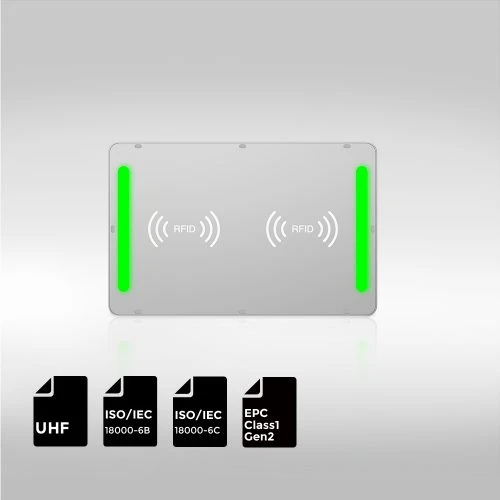
UHF RFID Ceiling-Mount Reader with Light & Sound Alarm

The RFID Ceiling-Mount Reader offers an ultra-thin, ceiling-mounted design with integrated antennas and advanced dual-sensing multi-tag reading. Its space-saving form allows easy installation, while built-in sound and light alarms detect unauthorized tags, enabling fully automated item entry and exit. Ideal for warehouse logistics, retail inventory, and asset tracking, it rapidly identifies large batches of tags to streamline inbound and outbound processes.