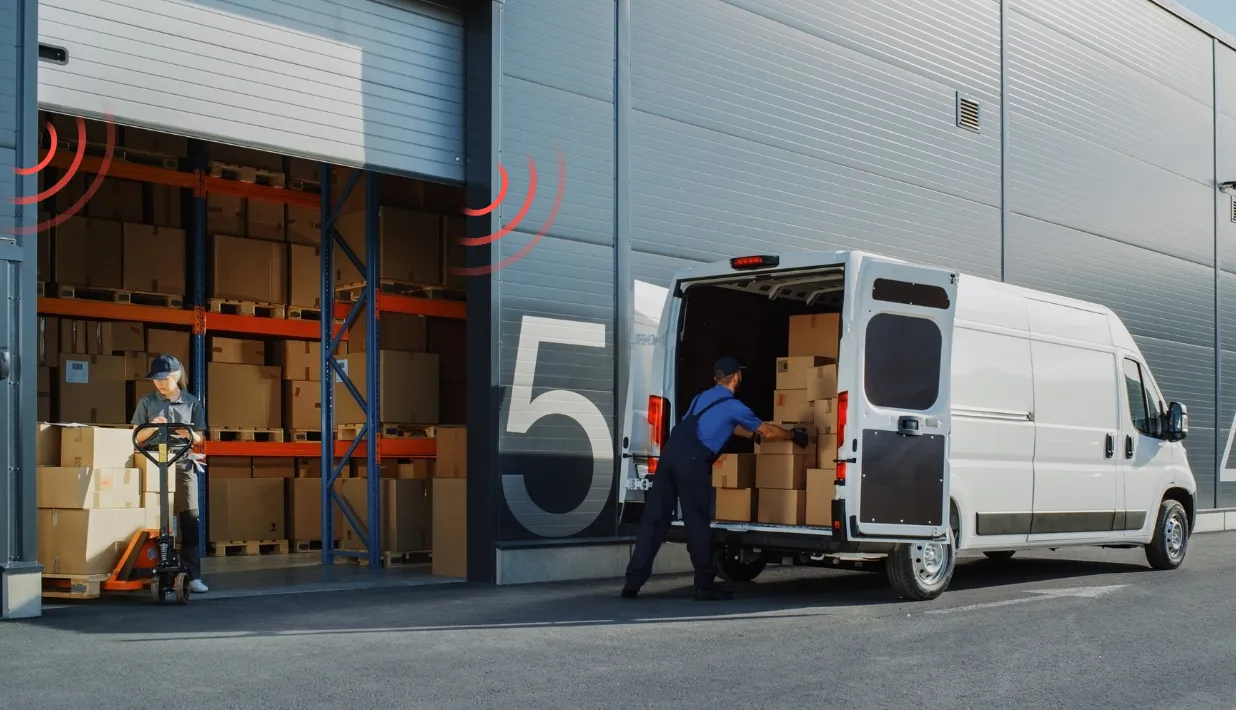
RFID (Radio Frequency Identification) technology has been widely adopted across various industries in recent years, becoming a vital tool for enhancing efficiency and management. This article will introduce a case study that details the application of RFID technology in agricultural product management, showcasing its tremendous potential in modern logistics and supply chain management.
Basic Concept of RFID Technology
RFID is a wireless communication technology that automatically identifies and tracks tags attached to objects via electromagnetic fields. An RFID system typically consists of tags, readers, and middleware. The tags contain embedded chips that store unique identification information; readers communicate with the tags via radio waves; and middleware processes the data transmitted by the readers, integrating it into the enterprise’s management system.
Case Background: Gourmet Company’s Needs
Gourmet, a company based in the Netherlands, specializes in the cultivation, sorting, packaging, and distribution of agricultural products like onions, scallions, and garlic. In the past, the company relied on a barcode system to manage the agricultural products in its warehouse. This manual scanning process was inefficient and prone to human error. When operators forgot to scan or made scanning errors, the system could not accurately track the products’ location and status. Therefore, Gourmet sought to introduce a technology that could automatically track the location of goods and reduce human errors.
Implementation and Application of RFID Technology
To achieve this goal, Gourmet implemented an RFID-based forklift management system in January 2023, fully deploying it across its warehouse.
In this system, two durable UHF RFID tags are securely attached to the sides of each storage box. This prevents the tags from falling off easily. Each tag has a unique ID number to identify the products inside the box. Ground tags are embedded in each row of shelves in the warehouse. These tags work with the RFID readers on the forklifts, allowing the system to track the movement of boxes.
Gourmet’s 22 forklifts are all equipped with RFID readers, each fitted with four antennas capable of 360-degree reading. The reader will read the information on the label as the forklift moves the storage box and transfer the data record to the server. The middleware filters and processes this data and integrates it into the warehouse management system, updating the box’s location and status.
System Operation and Effectiveness
In practice, the forklift picks up or places a storage box on a shelf. The reader captures the tag’s ID number and transmits the information to the management system. The system then determines the box’s location using the ground tag data. It updates the location accordingly. When packing goods for shipment, the operator uses the system’s information to accurately locate the corresponding box. This process ensures the correct products are retrieved and packed.
RFID technology has significantly improved Gourmet’s control over inventory. It also provides detailed historical records of box movements. These records include each box’s path, the times it was accessed, and how often it was packed. This reliable data and insight into the internal circulation of products have helped the company optimize processes and improve product quality management. In the future, Gourmet plans to extend the RFID system to finished products after packaging to further enhance supply chain transparency and efficiency.
Recommended RFID Antenna and Reader Products
In Gourmet’s case, the performance of RFID antennas directly affects the reader’s range and accuracy. To help businesses further optimize the performance of their RFID systems, we recommend RFID antenna and reader products from RFIDLabel®. These antenna products not only have excellent signal reception capabilities but have also undergone rigorous testing to ensure stable operation in various complex environments.
RFIDLabel offers a wide range of antennas. For example, the 12-dBi, 9-dBi, and 5-dBi UHF RFID antennas are suitable for different scenarios and needs. UHF RFID antennas support long-distance reading, making them particularly suitable for large warehouse applications. Additionally, RFIDLabel® antennas are compact, easy to install, and can be easily integrated into existing systems, further enhancing operational efficiency.
For reader options, models like the UHF RFID 4-port | 8-port reader AZ-U300 and the UHF RFID handheld reader AZ-C72 are available for selection.
Conclusion
If you are looking for high-quality antenna products to enhance the performance of your RFID system, consider choosing RFIDLabel®. Here, you can find RFID antenna and reader suitable for various application scenarios, whether for large warehouses, supply chain management, or operations in special environments. RFIDLabel® provides professional, reliable product solutions. Every product undergoes rigorous testing to ensure stable and precise performance. Visit rfidlabel.com now to choose the best RFID antennas for your business, helping you improve operational efficiency and gain a competitive advantage in the market!