Radio Frequency Identification (RFID) technology plays an increasingly important role in modern supply chain management and the Internet of Things (IoT). As the global economy rapidly develops and enterprises push forward with digital transformation, the application of RFID labels is becoming more widespread across industries such as logistics, retail, and healthcare. The advantage of RFID labels lies in their ability to automatically identify and read data from items without requiring direct line of sight, making them highly effective in improving operational efficiency, reducing human error, and enhancing supply chain transparency.
Classification of RFID Labels
RFID labels come in a variety of classifications, mainly categorized by frequency, function, shape, and integrated circuit (IC) type. These classifications not only determine the performance and application scenarios of RFID labels but also affect their actual effectiveness across different industries.
1. Classified by Frequency
RFID labels can be divided into high-frequency (HF) labels and ultra-high-frequency (UHF) labels based on their operating frequency.
- High-Frequency (HF) 13.56MHz: HF labels are typically used for short-distance data transmission, with common applications including access control cards, e-tickets, and smart cards. Their reading range is generally from 10 centimeters to 1 meter, making them suitable for scenarios requiring high security and short-range communication.
- Ultra-High-Frequency (UHF) 860-960MHz: UHF labels typically have a reading distance of up to 12 meters or more, making them particularly suitable for logistics and warehousing management scenarios requiring long-range identification. UHF labels can read multiple tags simultaneously, which is crucial for applications that require efficient batch processing.
Additionally, some labels on the market support dual-frequency, enabling them to handle both UHF and Near Field Communication (NFC). For example, UHF+NFC dual-frequency labels can be used in scenarios requiring both long-range tracking and close-range payment or identity verification.
2. Classified by Function
The functionality of radio frequency identification labels determines their performance in various application scenarios. These labels address the limitations of traditional labels in specific environments. They are designed to meet the needs of particular industries.
- Microwave-Safe RFID Labels: In the food industry, microwave-safe RFID labels are crucial. They operate in high-temperature environments without compromising performance or safety, making them ideal for pre-packaged foods heated in microwaves.
- Liquid and Metal Environment-Specific RFID Labels: Traditional RFID labels often fail in liquid or metal environments due to interference. These specially designed labels use unique materials to ensure reliable operation in harsh conditions, useful for medical device tracking, chemical management, and industrial manufacturing.
- Tamper-Evident RFID Labels: These labels become unreadable once tampered with or removed, making them essential for theft prevention and protecting high-value items or sensitive documents.
3. Classified by Shape
The shape and size of radio frequency identification labels determine their flexibility and suitability in practical applications. Different shapes of labels can adapt to various surface and packaging requirements.
- Round and Square Labels: Round labels are commonly used on bottle caps, cylindrical surfaces, or other small items, while square labels are more suitable for packaging boxes or other flat objects. These labels are typically small in size and easy to hide or attach to products.
- Rectangular Labels: Rectangular labels are often used on pallets, cartons, or elongated items. This shape covers a larger surface area, ensuring a higher reading success rate.
- Flag RFID Labels: Shaped like a flag, one end of these labels is attached to the object, while the other end remains free. This design provides stronger signals when read and is suitable for attachment to metal objects.
4. Classified by Integrated Circuit (IC) Type
The core of RFID labels is the integrated circuit (IC), responsible for storing and processing data. Different types of ICs have varying storage capacities, reading speeds, and encryption capabilities.
- Alien Higgs Series: The Alien Higgs chip series offers high storage capacity and fast reading capabilities, suitable for scenarios requiring large amounts of data processing or complex operations. The Higgs chip family includes models like Higgs 3, Higgs 4, and Higgs 9, each optimized for different application needs.
- Impinj Monza Series: The Impinj Monza series is renowned for its excellent performance and reliability, widely used in retail, logistics, and asset management. Representative products like the Impinj Monza R6P and M750 provide efficient reading speeds and large data storage capacities.
- NXP Series: The NXP chip series includes MIFARE, ICODE, and NTAG types, primarily used in transportation, payments, and access control systems. NXP chips are known for their high security and flexibility, suitable for scenarios requiring encrypted communication or multi-purpose applications.
Application Scenarios for RFID Labels
The application scenarios for RFID labels cover a wide range of industries, from retail to industrial manufacturing, logistics management, and healthcare. As technology continues to advance, RFID labels are constantly expanding their application boundaries, bringing more innovation and value to various industries.
- Logistics and Supply Chain Management
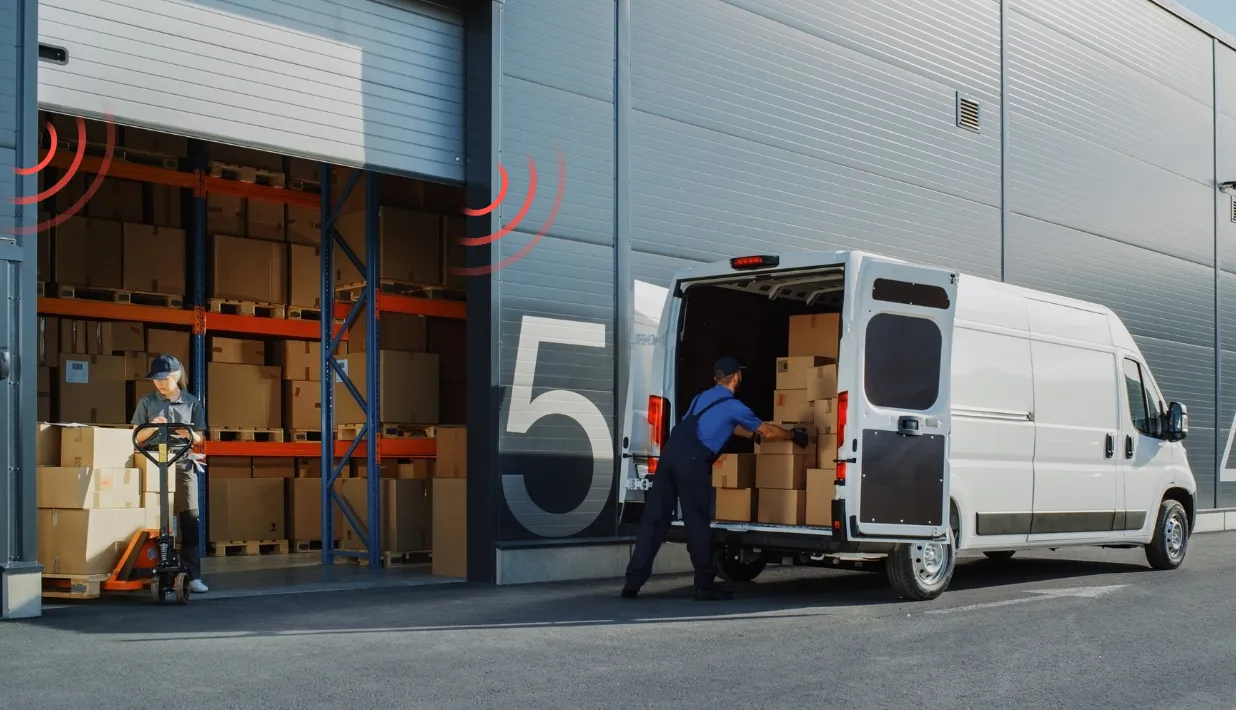
In logistics and supply chain management, radio frequency identification labels are widely used for tracking the location of goods, inventory management, and security monitoring during transportation. UHF labels, with their long-range reading capability and bulk reading characteristics, are particularly suitable for large warehouses and distribution centers. Through RFID technology, companies can monitor the exact location, quantity, and status of every item in real-time, significantly improving logistics efficiency, reducing inventory backlog, and minimizing human errors.
- Retail Industry
In the retail industry, RFID labels are used for product tracking, inventory management, and anti-theft systems. By attaching RFID labels to products, stores can monitor inventory levels, ensuring that shelves are always stocked. This not only improves inventory management efficiency but also enhances the customer shopping experience. Additionally, tamper-evident RFID labels used in anti-theft systems can effectively prevent product theft, improving store security.
- Healthcare Industry
In the healthcare industry, RFID labels are essential for tracking medical devices, managing pharmaceuticals, and verifying patient identities. These labels, designed for liquid and metal environments, are crucial for monitoring medical devices. They ensure that devices remain trackable during use, reducing the risk of loss or misuse. Additionally, RFID technology enhances pharmaceutical inventory management. It provides transparency and traceability in the supply chain, effectively preventing counterfeit drugs from entering the market.
- Smart Manufacturing
Smart manufacturing is the future of industrial development. The use of RFID labels in this field is becoming increasingly common. Companies attach RFID labels to production equipment, components, or finished products. This allows them to monitor every step of the production process. It ensures smooth operation of the production line. RFID labels can also interact with other smart devices. This creates a complete IoT system. The system enhances production efficiency and reduces waste and downtime.
Challenges and Solutions in RFID Technology
Although RFID technology has made significant advancements and is widely applied across various fields, it still faces challenges in practical applications, such as signal interference, cost issues, and data security. To address these challenges, RFID technology needs further optimization and development in the following areas.
- Signal Interference
In environments with metal or liquid, RFID signals can be easily disrupted, leading to read failures. To combat this, manufacturers have developed specialized RFID labels using unique materials and designs to ensure stable performance in such challenging conditions.
- Cost Issues
The cost of RFID labels has decreased due to technological advancements. However, deploying an RFID system remains a significant investment for small and medium-sized enterprises. Developers are actively working to lower the costs of tags and readers. At the same time, they are enhancing functionality to make RFID technology more accessible.
- Data Security
As RFID technology becomes more widespread, data security is increasingly important. Unauthorized reading or tampering can lead to sensitive information leaks. Developers are introducing advanced encryption technologies and access control mechanisms to secure RFID systems.
Summary
When choosing radio frequency identification labels, it’s essential to consider not only performance and application scenarios but also the quality and reliability of the products. At rfidlabel.com, we offer a wide range of high-performance RFID labels that cover different frequencies, functions, and shapes to meet your business needs. Whether you are optimizing supply chain management, improving retail inventory efficiency, or securing medical equipment, our products provide the best solutions. Visit rfidlabel.com today to explore more customized RFID solutions and enhance your business competitiveness!