In today’s rapidly developing technology environment, RFID (Radio Frequency Identification) technology has become an indispensable part of many industries. Especially in the field of electronic toll collection systems (ETC), the application of RFID technology not only improves efficiency but also improves user experience. This guide will detail how to fully deploy ETC RFID technology, help users better understand this technology, and guide users in their inquiries about RFID solutions.
Related Articles:
→ What Are RFID Windshield Tags and What Are Their Uses?
→ RFID Vehicle Identification Guide: Smart Parking, ETC, Access Control and Vehicle Tags
→ RFID Parking Sticker vs. Traditional Parking Permit: Which is Right for You?
→ Stop Toll Evasion: How RFID License Plate Is Revolutionizing Electronic Vehicle?
Overview of ETC RFID Technology
RFID technology identifies and tracks objects through the use of radio waves. Second, the RFID tags used in ETC systems are usually attached to the windshield of the vehicle. As the vehicle approaches the toll booth, the toll booth’s RFID reader sends out a radio signal that activates the tag and reads the information contained within. This process occurs within milliseconds, ensuring that vehicles move quickly.
The development history of ETC RFID Technology

The rise of electronic toll collection systems (1990s)
- Early 1990s: As car ownership increased, the problem of traffic congestion caused by traditional charging methods became increasingly serious. Many countries have begun to explore electronic billing solutions.
- 1993: The United States first launched an RFID based highway electronic toll collection system in California, marking the official application of ETC technology.
Technical standardization (late 1990s to early 2000s)
- 1997: The International Organization for Standardization (ISO) issued a standard for RFID technology, providing specifications for global applications.
- 2000: Several countries successively launched RFID electronic toll collection systems, such as the EZ-Pass system in the United States and the ETC system in Japan.
System Optimization and User Acceptance (2000s)
- Early 2000s: With the continuous optimization of the technology, the reading distance and accuracy of RFID tags have significantly improved, and the stability of the system has also improved. More and more users accept the ETC technology, and the utilization rate gradually increases.
- 2003: The ETC system in the U.S. has covered more than 50% of highways and has become an important tool for traffic management.
Multi-domain applications (2010s)
- 2010s: The application of RFID technology is no longer limited to the transportation field, but also expands to many industries such as logistics, retail, and medical care. The promotion of ETC technology in different countries and regions has gradually become a standard.
- 2011: China officially launched a national ETC system, which promoted the improvement of traffic management efficiency nationwide.
Smart cities and big data (late 2010s to date)
- Late 2010s: With the introduction of the concept of a smart city, ETC RFID technology gradually integrated with emerging technologies such as big data and the Internet of Things (IoT). Through real-time data analysis, traffic management departments can more accurately schedule resources and improve urban operating efficiency.
- 2020s: Many cities began to use RFID technology to collect traffic data to support urban planning and traffic management.
Sustainable development and environmental protection
With the global emphasis on environmental protection, RFID technology helps reduce carbon emissions while improving transportation efficiency, which is in line with the concept of sustainable development. Many countries are promoting RFID solutions to achieve greener transportation systems.
Key benefits of RFID Technology in ETC
The advantages of RFID technology in the Electronic Toll Collection (ETC) system are mainly reflected in the following aspects.
Efficiency
- Rapid passage: RFID systems allow vehicles to pass through toll booths without stopping, significantly reducing queuing times and traffic congestion.
- Real-time data processing: RFID tags can be read in milliseconds, allowing toll collection and data transmission to be completed instantly, improving the system’s responsiveness.
Cost Benefits
- Reduced labor costs: By automating toll collection, the need for manual toll collectors is reduced, thus lowering operating costs.
- Optimize resource utilization: The RFID system can accurately record vehicle traffic information, which helps to manage and dispatch traffic resources more effectively.
Data Accuracy
- Reduce human error: RFID technology eliminates errors in manual toll collection and improves data accuracy and consistency.
- Real-time monitoring and analysis: The system can collect and analyze traffic data in real time, helping managers make more informed decisions.
User Experience
- Convenience: Users do not need to carry cash or wait for change, which improves the convenience of passage.
- Transparent Toll Collection: The ETC system can provide a detailed breakdown of fees, which increases the transparency of fees and makes them more acceptable to users.
Environmentally Friendly
- Reduce Emissions: By reducing the dwell time of vehicles at toll booths, RFID technology helps to reduce carbon emissions from vehicles, which is in line with sustainable development goals.
- Supports Intelligent Transportation: Integration with other intelligent traffic management systems promotes more efficient traffic flow, further reducing environmental impact.
Security
- Fraud prevention: RFID tags have a unique identification code, reducing the risk of counterfeiting and fraud.
- Data encryption: Many RFID systems utilize encryption technology to ensure the security of user information and transactions.
Scalability
- Flexible Adaptation: RFID systems can be expanded as needed to support different sizes of toll booths and transportation systems.
- Technology Integration: RFID technology can be integrated with other technologies (e.g., GPS, IoT) to enhance overall traffic management efficiency.
Enhanced Operations Management
- Traffic monitoring: RFID technology makes traffic monitoring and management more efficient, helping traffic management departments to keep abreast of road conditions.
- Data analysis capability: The system can collect a large amount of data and provide analytical support to help optimize traffic policies and planning.

Main application scenarios of ETC RFID technology
RFID technology is widely used in electronic non-stop toll collection systems, mainly used in toll collection scenarios such as freeways, bridges and tunnels. Through RFID technology, the ETC system realizes the function of automatic identification and fee deduction without stopping when the vehicle passes through the toll station. The following are the specific application scenarios of RFID technology in ETC.
Vehicle identification
In ETC systems, RFID tags are usually embedded in onboard equipment (OBU) and installed on the windshield or other parts of the vehicle. When a vehicle approaches the toll station, the toll station’s antenna (reader) will emit radio waves, activate the RFID tag of the in-vehicle equipment, and read the vehicle’s unique identity information, such as license plate number, vehicle type, etc. This process is real-time and does not require parking, resulting in fast passage.
Automatic fee deduction
By reading the vehicle’s RFID tag information, the system binds this information to the account in the back-end database and automatically calculates the fee based on the distance the vehicle travelled or the toll area it passed. This information will be transmitted to the toll system to deduct the corresponding amount from the vehicle owner’s account. The whole process is completed while the vehicle is moving, greatly improving the efficiency of the passage.
Automatic control of freeway intersections
RFID technology is not only used for the automatic deduction of fees but also can realize the automatic release. Vehicles through the toll station, the antenna reads the RFID information in the vehicle equipment, the system confirms the identity of the vehicle and the cost of payment, and automatic control of the barriers up, allowing vehicles to pass. This greatly reduces vehicle queuing and waiting time.
Blacklisted Vehicle Recognition
RFID systems can be linked with freeway management systems to monitor and manage vehicles in real-time. If a vehicle belongs to the blacklist (e.g. unpaid tolls or other violations), the system can automatically recognize the vehicle when it passes through the toll booth and take corresponding measures (e.g. not lifting the barriers, issuing warnings, etc.), thus strengthening road toll management and vehicle control.
Vehicle path tracking
In some systems, RFID can also be used to track the path of a vehicle. By setting up readers at different toll stations to record the time the vehicle passes through each station, the background can analyze the vehicle’s driving path, stay time and other information. This not only helps ETC’s precise charging but can also be used for road management and traffic data analysis.
Multi-Lane Free Flow (MLFF)
In modern ETC systems, RFID technology also supports multi-lane free flow (MLFF) traffic modes. In this mode, vehicles do not need to enter a specific ETC channel but can pass through any lane. The RFID reader can identify vehicle information across lanes and complete fee deductions. This method further improves traffic efficiency and reduces traffic congestion.
Parking Lot Charging
RFID technology is not only used in highway tolls but is also gradually applied to parking lot charging systems in the city. By binding RFID tags and vehicles, the parking lot can automatically identify the vehicles entering and leaving, automatically calculate the length of parking and deductions, achieve non-sensitive payment, reduce manual intervention and improve the management efficiency of the parking lot.
Vehicle classification management
RFID technology can help toll collection systems classify and manage different vehicle types (such as trucks, buses, small cars, etc.). Different types of vehicles have different charging standards. The system identifies the vehicle type by reading RFID tags and automatically charges according to the corresponding standards.

How to comprehensively deploy RFID technology in ETC?
Requirements Analysis
When conducting a demand analysis, the needs of different users should be well understood. Examples include target throughput, expected return on investment, and user experience needs. On the other hand, there are significant differences between the needs of freight vehicles and personal vehicles. Users should collect data through interviews, questionnaires, etc., which will help to develop more appropriate technical solutions.
Selecting the right RFID tags and readers
Different application scenarios require different types of RFID tags and readers. Select the most suitable device according to your requirements.
- RFID Tags Comparison Table
| RFID tag type | Characteristics | Applicable scenarios |
| Passive RFID tag | No batteries required, low cost | General tolls |
| Active RFID tag | Built-in battery for longer reading distance | Freeway tolls |
| High-temperature resistant RFID tag | Suitable for extreme environments | Identification of special vehicles or equipment |
- RFID Readers Comparison Table
| RFID reader type | Characteristics | Applicable scenarios |
| Fixed RFID reader | Mounted in specific locations for high speed traffic | Tollbooths, entrance / exit monitoring |
| Handheld RFID reader | Highly flexible and easy to operate on-site | Inspection, maintenance and data collection |
| Portable RFID reader | Easy to deploy for dynamic scenarios | Traffic monitoring and site management |
System Integration
System integration is a complex process for users. Integrating RFID hardware with the back-end management system ensures that all devices and software systems can work together and data flow smoothly. Common system integration techniques include APIs, data exchange protocols, and so on. The following are two aspects of the integration process that need to be considered.
- Data management system: Choose a robust back-end system to process and analyze the data obtained from RFID readers.
- Interface standards: Adopt an open standard interface to ensure compatibility with future technology updates.
Testing and Optimization
During the testing phase, the system should be monitored in real-time for various performance indicators, including read success rate and delay time.
- Read success rate: to ensure that the vast majority of tags can be successfully read.
- Delay time: monitor the time from reading to information processing to ensure that the system runs efficiently.
On the other hand, user feedback is also an important basis for optimizing the system. Deployers can collect feedback through questionnaires, direct interviews, etc., and target system optimization.
Key technical challenges and solutions for RFID in the ETC field
In the ETC field, RFID technology has many advantages but also faces some technical challenges. The following are the related challenges and corresponding solutions.
1. Signal Interference and Recognition Problems
Challenges
- Environmental interference: RFID signals may be interfered with by other wireless signals, metal objects and buildings, resulting in inaccurate or failed identification.
- High-speed identification: On freeways, rapid vehicle passing may result in tags not being read promptly.
Solutions
- Choosing the right frequency: Use higher frequency RFID tags (e.g. UHF) to improve penetration and identification range.
- Optimizing antenna design: Improve the antenna design of RFID readers to increase the sensitivity of signal reception and ensure that fast-moving vehicles can be accurately identified.
2. Security issues
Challenges
- Data leakage and tampering: Data in RFID tags may be read or tampered with by hackers, leading to security risks.
- Identity theft: Unscrupulous individuals may forge or copy RFID tags to gain undue advantage.
Solutions
- Data encryption: Use strong encryption algorithms between RFID tags and readers to protect security during data transmission.
- Multiple authentication: Combine with other authentication methods (e.g. Bio-metrics) to enhance system security and prevent identity theft.
3. Cost and investment
Challenges
- High initial investment: Deployment of an RFID system requires a high initial investment, including hardware, software and infrastructure development.
- Maintenance costs: Long-term maintenance and updating of the system may also increase operational costs.
Solutions
- Step by step implementation: A phased approach to system deployment reduces the pressure on initial investment and allows for optimization of subsequent implementations based on feedback.
- Technology innovation: Develop new RFID technologies with lower cost and higher performance to reduce overall investment.
4. Standardization and interoperability
Challenges
- Lack of unified standards: RFID systems from different vendors may lack interoperability, making integration difficult.
- Technology compatibility issues: Compatibility issues between existing systems and new technologies may affect system upgrades and expansion.
Solutions
- Promote industry standardization: Actively participate in the development of industry standards to promote interoperability between different systems.
- Modular design: Adopt a modular design concept to ensure that system components can be flexibly interchanged and upgraded.
Practical cases of ETC RFID technology
Widespread use of ETC systems in China
In China, RFID technology is widely used in ETC systems, especially in highway toll collection scenarios. China’s ETC system uses 5.8GHz RFID technology to realize automatic toll payments without stopping the vehicle. Through the radio frequency communication between the on-board ETC equipment (OBU, On-Board Unit) and the antenna (RSU, Roadside Unit) on the highway toll station, the vehicle information is quickly read and interfaced with the payment system in the background. The system significantly improves highway traffic efficiency and reduces congestion, especially during holidays and rush hours.
Japan ETC 2.0 System
The upgraded version of the Japanese ETC system, ETC 2.0, not only utilizes RFID technology for toll collection but also incorporates the collection of vehicle travel information to optimize traffic flow management. By collecting data such as vehicle location information and travel speed through onboard devices, ETC 2.0 can provide drivers with real-time traffic information and suggest optimal routes. This RFID based ITS enhances the overall travel experience, reduces traffic congestion, and provides better data support for emergency response.
RFID Applications in European Countries
In Germany, France and other European countries, RFID technology is combined with the ETC system, which is not only applied to personal vehicles but also extended to freight fleet management. DSRC (Dedicated Short Range Communication) technology used in some European countries is also a form of RFID, used for ETC charging, vehicle identification and so on. Germany’s Toll Collect system is a successful case, through RFID technology to all the weight of more than 12 tons of trucks to charge. This system greatly improves toll collection efficiency and road network management and helps the country to effectively allocate road maintenance costs.
U.S. E-ZPass System
The E-ZPass system in the U.S. is one of the world’s earliest examples of ETC using RFID technology, covering highways in several states. E-ZPass uses RFID tags to identify vehicles, allowing users to pass through toll booths quickly and automatically pay tolls. Due to its efficient toll processing and extensive interstate network, E-ZPass has become one of the most successful ETC systems in the United States. The system has dramatically reduced highway congestion, especially in inter-regional traffic connecting different states.

The future development trend of RFID technology in ETC
The future development trend of RFID technology in the field of electronic toll collection systems (ETC) is mainly reflected in the following aspects.
Technology integration and upgrading
- Internet of Things (IoT) integration: RFID will be deeply integrated with IoT technology to realize smarter traffic management. Vehicles, roads and transportation facilities will be interconnected through the network, sharing real-time data and improving system responsiveness.
- 5G technology application: the popularization of the 5G network will greatly enhance the data transmission speed and stability of the RFID system, realize higher frequency information update and processing, and reduce the delay.
Security enhancement
- Data encryption and privacy protection: The future RFID system will strengthen data encryption and user privacy protection to prevent hacker attacks and information leakage, and enhance users’ trust in the system.
- Multiple identity verification: Combining bio-metrics and RFID, multiple identity verification is realized to further improve the security of the system.
Intelligent and Automation
- Intelligent traffic management system: RFID will help intelligent traffic management to optimize traffic flow and reduce congestion through real-time data analysis and prediction.
- Adaptive Toll Collection System: Automatically adjust the toll collection strategy according to real-time traffic conditions to realize dynamic pricing and enhance resource utilization efficiency.
Sustainable Development
- Green transportation solutions: RFID technology will promote the establishment of green transportation systems, reduce traffic congestion and emissions, and reduce environmental impact through efficient toll management.
- Support smart city construction: RFID will become an integral part of smart cities, supporting sustainable development goals by optimizing traffic management.
User Experience Optimization
- Personalized service: The RFID system will use big data to analyze user behaviour and provide personalized travel suggestions and services to enhance user experience.
- Popularization of self-service terminals: More and more self-service terminals will use RFID to simplify the charging and service process and improve convenience.
Conclusion
The full deployment of ETC RFID technology will bring significant efficiency gains and user experience improvements to your organization. Successful implementation of this technology is not difficult through effective needs analysis, appropriate device selection, system integration and optimization testing.
RFIDLabel is committed to providing you with high-quality RFID solutions to help you succeed in this field. For more information, please contact us. With our team of specialists, you will receive a customized RFID solution.
FAQs
1. How durable are RFID tags?
The durability of RFID tags usually depends on the material and the environment in which they are used. High-quality tags can function properly in harsh environments and have a lifespan of five years or more.
2. How to choose the right RFID device?
When choosing a device, consider factors such as functionality, read range, cost and compatibility. It is important to have in-depth communication with the supplier for technical support and advice.
3. How difficult is it to maintain an ETC system?
Maintaining an ETC system is usually uncomplicated, but requires regular inspection of the equipment to ensure stable system operation. It is recommended to develop a detailed maintenance plan to deal with potential problems promptly.
4. What is the environmental impact of RFID technology?
RFID technology improves efficiency while helping to reduce traffic congestion, thereby reducing carbon emissions.
Recommended Product

UHF RFID Windshield Label with Security Cuts 110x45mm | Alien Higgs® 9

The Alien Higgs® 9 RFID windshield label is designed to enhance your vehicle tracking capabilities. Embedded with the advanced Alien Higgs® 9 chip, the label compliant to GS1 Class 1 Gen 2 and ISO/IEC 18000-6C to ensure high-accuracy reading. Equipped with a strong and durable 3M467 adhesive, it provides a strong adhesion, perfectly combining security and efficient tracking. In addition, the label adopts a tamper-evident security cuts design, which cannot be used once removed to protect your information security.
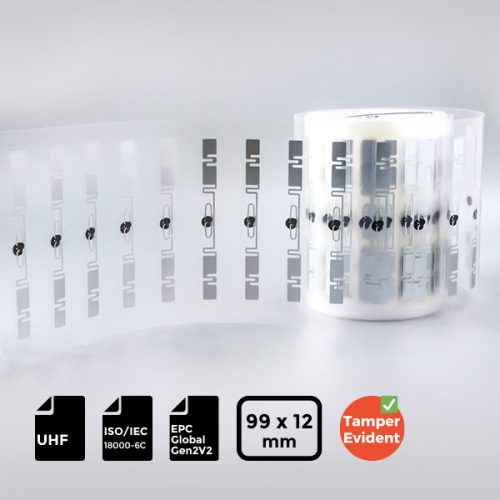
Tamper-Proof UHF RFID Headlight Label 99x12mm | ISO18000-6C
The Tamper-Proof UHF RFID Headlight Label offers secure and reliable identification for various applications. Its unique design resists tampering and unauthorized removal, ensuring data integrity. Using UHF RFID technology, it provides long-range reading capabilities for efficient asset tracking. The tag is highly durable, suitable for harsh environments, and features a secure identifier for each item.