RFID parking stickers have revolutionized vehicle access control, offering a modern alternative to conventional parking permits. This article delves into the advantages and considerations of both systems to help you determine the best fit for your needs.
Related Articles:
→ What Are RFID Windshield Tags and What Are Their Uses?
→ RFID Vehicle Identification Guide: Smart Parking, ETC, Access Control and Vehicle Tags
→ ETC RFID Technology Guide: How To Make A Full Deployment
→ Stop Toll Evasion: How RFID License Plate Is Revolutionizing Electronic Vehicle?
The Evolution of Parking Management
Parking management has come a long way from simple paper permits and manual checks. The demand for efficiency, security, and convenience has driven the adoption of advanced technologies, with RFID (Radio-Frequency Identification) emerging as a leading solution. Traditional parking permits, while familiar, often present limitations in large-scale or high-traffic environments.
What are Traditional Parking Permits?
Traditional parking permits typically consist of physical decals, hangtags, or cards that are visually inspected by parking attendants. They are a straightforward method for identifying authorized vehicles and are commonly used in residential areas, small businesses, and educational institutions.
What are RFID Parking Stickers?
RFID parking stickers are small, adhesive labels embedded with an RFID chip. These stickers are affixed to a vehicle’s windshield or headlight and communicate wirelessly with RFID readers installed at entry and exit points. This technology enables automated vehicle identification and access, streamlining the parking process.

Key Differences and Benefits
The fundamental difference between the two lies in their operational mechanism: manual verification versus automated electronic identification. This distinction leads to several key benefits for RFID systems.
Convenience and Speed
Traditional permits require vehicles to stop for manual inspection, which can lead to queues and delays, especially during peak hours. In contrast, RFID parking stickers allow for seamless entry and exit. Vehicles with an RFID sticker can pass through gates without stopping, as the system automatically grants or denies access, significantly reducing traffic congestion and improving flow.
Enhanced Security
Physical permits are susceptible to counterfeiting, theft, or unauthorized transfer, posing security risks. RFID technology offers a higher level of security. Each RFID parking sticker has a unique identifier that is difficult to duplicate, and the system can track vehicle movements, providing a robust audit trail. This reduces the incidence of unauthorized parking and enhances overall site security.
Data Management and Reporting
Managing traditional permits often involves manual record-keeping, which is prone to errors and time-consuming. RFID systems, however, automatically collect data on vehicle entries and exits. This data can be used for real-time monitoring, occupancy tracking, and generating detailed reports on parking patterns and usage. Such insights are invaluable for optimizing parking space utilization and planning.
Durability and Longevity
Paper or plastic traditional permits can wear out, fade, or get damaged over time, requiring frequent replacement. RFID parking stickers are designed for durability and can withstand various weather conditions, ensuring a longer lifespan and reducing replacement costs.

Application Scenarios
Both systems have their ideal applications, depending on the specific needs and scale of the parking facility.
When Traditional Permits Suffice
Traditional permits are suitable for smaller parking lots with limited traffic, where manual oversight is feasible and cost-effective. They are also a good choice for temporary parking solutions or events where quick deployment and low initial cost are priorities.
When RFID Parking Stickers Excel
RFID parking stickers are particularly beneficial for large-scale operations such as corporate campuses, residential communities, universities, and commercial parking garages. Their automation capabilities make them ideal for high-volume traffic, enhancing efficiency and security. They are also preferred for applications requiring integrated access control systems, such as toll collection or gated communities.

Cost Considerations
The initial investment for RFID systems can be higher due to the cost of readers, software, and the stickers themselves. However, the long-term operational savings from reduced labor, improved efficiency, and enhanced security often outweigh the upfront costs. Traditional permits have lower initial costs but may incur higher ongoing administrative and replacement expenses.
Conclusion
Choosing between traditional parking permits and RFID parking stickers depends on a careful evaluation of your specific requirements, including traffic volume, security needs, budget, and desired level of automation. While traditional permits offer a simple and low-cost solution for basic needs, RFID technology provides a sophisticated, efficient, and secure system that is increasingly becoming the standard for modern parking management. To explore high-quality RFID solutions tailored to your needs, visit rfidlabel.com for more information and product details.
Recommended Product
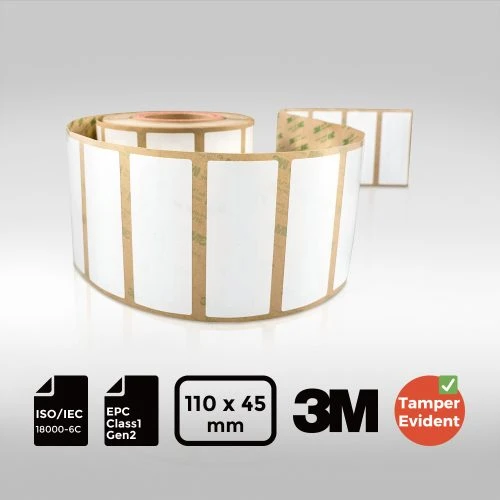
UHF RFID Windshield Label with Security Cuts 110x45mm | Alien Higgs® 9

The Alien Higgs® 9 RFID windshield label is designed to enhance your vehicle tracking capabilities. Embedded with the advanced Alien Higgs® 9 chip, the label compliant to GS1 Class 1 Gen 2 and ISO/IEC 18000-6C to ensure high-accuracy reading. Equipped with a strong and durable 3M467 adhesive, it provides a strong adhesion, perfectly combining security and efficient tracking. In addition, the label adopts a tamper-evident security cuts design, which cannot be used once removed to protect your information security.
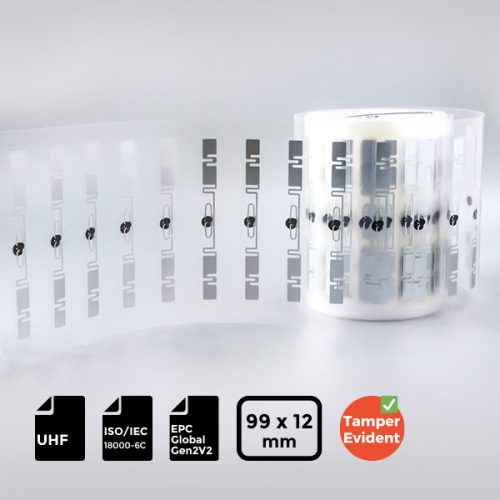
Tamper-Proof UHF RFID Headlight Label 99x12mm | ISO18000-6C
The Tamper-Proof UHF RFID Headlight Label offers secure and reliable identification for various applications. Its unique design resists tampering and unauthorized removal, ensuring data integrity. Using UHF RFID technology, it provides long-range reading capabilities for efficient asset tracking. The tag is highly durable, suitable for harsh environments, and features a secure identifier for each item.